
30 KiB
Executable File
| title | tags | date | draft | lastmod | |||
|---|---|---|---|---|---|---|---|
| The Media is Wrong about the No AI FRAUD Act |
|
2024-01-24 | false | 2024-08-29 |
[!info] Update Since publication, GPT-4o was released with controversy over a celebrity voice being potentially appropriated. #Detour Her
Here's an AI skeptic's legal take on the bill.
The No AI FRAUD Act is a bipartisan House bill introduced by Florida Rep. Salazar and Pennsylvania Rep. Dean that's making waves. Both the EFF and Techdirt have published pieces slamming the bill for stepping on the toes of the First Amendment and Section 230. Their pieces only properly address one problematic component of the bill, and completely ignore the positives of its current draft. Could its provisions be worded better? Absolutely. But that asks too much of our legislature, and most of the bill would be fine as-is.
Warning
CW: uspol, AI
Summary of the Bill
Please read the full text yourself! This summary restructures the text and omits several legal concepts in favor of simplicity. The most important points are bolded. In effect, the bill:
- Establishes a transferable federal publicity right in one's voice and likeness that extends beyond death that steps past a website's Section 230 immunity from most suits concerning user content
- Creates a private cause of action against:
- Proprietors of "personalized cloning services": software with the primary purpose of producing digital voice replicas/depictions
- Anyone who releases an unauthorized digital voice replica/depiction
- For both of the above, a disclaimer saying that the person depicted/replicated is not affiliated is not a defense
- Establishes statutory damages for all of the above
- Outlines a First Amendment defense
- Specifies that this does not affect any judicial First Amendment applications
- Creates a defense of negligible harm and specifies how to determine if harm is negligible
- But if the replica/depiction is CSAM or sexually explicit, it's harmful in and of itself (and the defense is not available)
What the Media Ignores
The context that this bill was passed in is helpfully provided as Section 2. The claims in the Findings section check out:
- AI songs and advertisements are rampant.
- AI has been used to undress high schoolers without consent.
- Nothing is being done about the tidal wave of AI porn of nonconsenting adult women, notably creators and influencers.
- Twitter's currently being made fun of for its stance against T-Swift deepfake porn, which is ridiculous.
Outside of the Act at hand:
- Current law is not extensive enough to properly regulate AI misuse.
- And overall, there's mounting concern about how accessible the potential for abuse of AI is.
If we were to evaluate the bill for how well it addresses these problems, I think we'd reach a much different result (not advocating for blindly following this approach without heed to doctrinal side effects though). Instead, the articles choose to sensationalize the faults that every bill has regardless of subject matter. The reality is that senators are not perfect (far from it), and cannot anticipate every scenario with a bill. Thus:
"Rules are more like guidelines, really."
This analysis looks at the bill by first accepting the proposition that all enacted laws are put through a judicial sniff test, and stretched a little according to the mores of the judge being asked to apply it. This approach is common to all legal critiques on this site.
- Sidebar: there's also a somewhat pressing meta-problem I have with the articles that they outline that they are concerned about something, but don't follow the concern to its logical conclusion of spelling out "here's what effect that would have on the everyday citizen," or "here's the historical context that would justify our concern." People who are familiar with this body of law can keep up, but it could be indecipherable to others. I'm going to try to provide that context where necessary. Let me know if it feels like I stop short at any point here.
For this bill specifically, the primary adverse effect that pundits (and I) are watching for is if it enables new legal arguments/rights outside of AI. If a provision does that, it falls out of alignment with the Act's purpose. The headline item unfortunately does just that.
Audio + Visual
First, let's talk about something the articles properly draw attention to.
The newsworthy component of the bill is its federal right of publicity in one's voice and image. This unqualified provision raises justified concerns that it's an overly broad response to a narrow AI problem. I've got three main concerns:
First, there's the concern that this right will be abused to limit otherwise proper speech that has a neutral or negative effect on public figures. Think defamation but without truth as a defense. I'm not certain that something like anti-SLAPP law would cover every corner of the right. This provision absolutely falls within the concern that the bill is touching rights outside of AI. I don't think the other sections of the bill speak as strongly to a SLAPP concern though, I talk about that more when discussing #The First Amendment Defense.
Alternatively, this could be used as a statutory justification to federally try state right-of-publicity causes of action. State law is a quilted patchwork of name/image/likeness rights and remedies. These are typically kept out of federal court, as there are policy reasons for letting the states try the actions they recognize (federalism, juries' attitudes toward parties, perceived legitimacy of the resulting decision, etc). Perhaps more importantly, Erie doctrine all but abolishes federal common (unwritten/judge-made) law and relegates those causes of action to the states exclusively. If we're asking judges to incorporate what is often state common law into a federal statute, this could be in direct violation of that doctrine.
- Sidebar: also, state doctrines are called NIL (name, image, likeness) for a reason. Who knows what states they extend to voice in?
Another (more out-there) alternative: given that this is specifically labeled as an IP right, courts could read this to preempt state publicity law. Thankfully Congress anticipated this (definitely unfavorable) outcome and included a no-preemption clause; I'll be watching to make sure that makes its way through the amendments as the bill goes through the process.
There is an argument that senators included limiting language elsewhere, which was enough to cabin this right. I disagree with that view, and I think that the causes of action outlined later in the bill text are only one application of this new right. Even without addressing the duration/transferability of the right, it's definitely too broad. The rest of the bill though, being one application under that right, is not.
Breadth
Bottom line up front: To use a hypothetical, I don't think a judge would interpret this bill to haul Fox into court because Family Guy made fun of Tom Cruise, and Sean Kenin just so happened to record the lines in a modern studio.
Again, the concern implicit in the articles is that this bill might have adverse effects outside of AI. In a situation like the hypo above: on top of being a plainly unconstitutional application (I'll talk about that more in the First Amendment section), the statute would probably not textually apply at all.
The arguments made by EFF and the Techdirt article seem to only apply to the replication/depiction offenses and not the cloning service part (since the "primary purpose" language is very hard to satisfy outside of the statute's intent). For those replication offenses, the act defines the key terms as:
- "digital voice replica": audio created or altered in whole or part by computer software; that contains a replica, imitation, or approximation of an individual that was not actually performed by that person.
- Awkwardly worded for sure.
- "digital depiction": a replica, imitation, or approximation of someone's likeness created or altered using computer software.
There’s not much that wouldn’t fall into that category—from pictures of your kid, to recordings of political events, to docudramas, parodies, political cartoons, and more. If it involved recording or portraying a human, it’s probably covered.
- EFF
I disagree. I don't think anything would lead a judge to read "recorded" into "created," especially given the context of the bill.
First, this would clearly be against Congressional intent. The bill was introduced to combat AI abuse. The sort of "creation" that those offenses entail is when you input/select a prompt/person and the AI creates a voice/likeness in response to the input. Likewise, an alteration by an AI would be the input of a base video and a likeness you wish to "alter" the base video by.
On the other hand, when you sing into a microphone to make a song in Ableton, the computer software isn't what's creating the audio; you are creating the sound. I do think that the alteration with computer software argument is easier to make because of things like picture filters and voice post-processing, but judges are typically hesitant to dictate an "even a scintilla of <insert quantifiable statutory element>" approach for any statute. That kind of logic lends itself too easily to frivolous or Congressionally-unsanctioned (!!) lawsuits that could toe the line of SLAPP. The EFF's position argues that the only interpretation of this statute is one that would probably be considered unworkable by most judges.
- Speaking of credit to judges, I actually think the often-lacking tech literacy of judges makes the no-creation argument easier to make, and easier to push the human-AI divide in who's actually creating. Obviously if a human creates the sound, then it's not created with digital software. And the human element means that you can tell a story and answer an important question: "why?"
Detour: Her
Below is a statement from Scarlett Johansson:
!
[!info]- Alt text for image "Last September, I received an offer from Sam Altman, who wanted to hire me to voice the current ChatGPT 4.0 system. He told me that he felt that by my voicing the system, I could bridge the gap between tech companies and creatives and help consumers to feel comfortable with the seismic shift concerning humans and Al. He said he felt that my voice would be comforting to people.
After much consideration and for personal reasons, I declined the offer. Nine months later, my friends, family and the general public all noted how much the newest system named "Sky" sounded like me.
When I heard the released demo, I was shocked, angered and in disbelief that Mr. Altman would pursue a voice that sounded so eerily similar to mine that my closest friends and news outlets could not tell the difference. Mr. Altman even insinuated that the similarity was intentional, tweeting a single word "her" - a reference to the film in which I voiced a chat system, Samantha, who forms an intimate relationship with a human.
Two days before the ChatGPT 4.0 demo was released, Mr. Altman contacted my agent, asking me to reconsider. Before we could connect, the system was out there.
As a result of their actions, I was forced to hire legal counsel, who wrote two letters to Mr. Altman and OpenAl, setting out what they had done and asking them to detail the exact process by which they created the "Sky" voice. Consequently, OpenAl reluctantly agreed to take down the "Sky" voice.
In a time when we are all grappling with deepfakes and the protection of our own likeness, our own work, our own identities, I believe these are questions that deserve absolute clarity. I look forward to resolution in the form of transparency and the passage of appropriate legislation to help ensure that individual rights are protected. "
Warning
This statement leaves out a detail. Sky was released in September 2023 (the month that OpenAI reached out to Scarlett), but gained widespread public attention in the May 2024 announcement. h/t Timothy Lee
I don't think it makes much difference; the likely eventuality is that both times Scarlett was contacted before a publicity event that would feature a model inspired by (and possibly cloned from) her voice. Additionally, given tech bro culture ("go fast break shit"), I think both times the AI model had already been trained on her voice and presented to Altman in a finished state.
Given my position as stated, I think that OpenAI would be liable for creating an unauthorized digital voice replica only if this AI was indeed trained on Scarlett Johansson's voice.
- Sidebar: the statute obviously was not in force at the time of the controversy here. If it was passed tomorrow to go into effect on the same day, it wouldn't cover anything previous.
This scenario seems like one of the specific fact patterns that the No AI FRAUD Act was introduced to dispense with. If we look at the statutory elements, I think that voice responses from GPT-4o with the Sky model are what infringes. Those audio clips are "created" by the AI/"computer software" from its model, and contain a "replica" of Johansson's voice.
Obviously, this analysis gets messier when you factor in what the statute says about "imitation" and "approximation," because there's the possibility that instead OpenAI used an impersonator. But I think that there's a strong argument that since it would not be a replica of Scarlett's voice, the harm caused to her does not outweigh the factors discussed in the next section.
Perfectly Balanced[?]
This was a weird one to analyze for me, because the EFF kind of just...Didn't read the balancing test properly? They conflate it with a lot of the broader First Amendment commentary around the bill, which feels distinct from the balance-of-the-harms section (despite its inclusion as a balancing factor). I do agree that the balance is effectively mini-copyright fair use. However, it's not precisely fair use for an important reason. Let's go through the exclusive (as opposed to illustrative like in copyright fair use) factors one by one.
Relevance to primary expressive purpose
If this section feels less grounded than the rest, that's because it is. Factors are inherently squishy to analyze, absent lots of time for the doctrine to dig a trench. I think that's what the drafters were trying to leapfrog by lifting from established doctrine, but I question their choice of principle.
This language is from trademark cases, and is tied to a First Amendment side of a doctrine called "trademark fair use." For example, you can't be sued by big-name performers for use of their name in your movie because the movie is about showbusiness characters who made a living imitating those big-name performers. Rogers v. Grimaldi.
Of the two fair use factors in this balance, relevance feels more at-home when talking about AI use. If you're just throwing an unauthorized AI-generated picture of Prince into your work because it looked good (was that a Warhol reference?), is it really a choice worth protecting? This factor will ensure that if you're risking the harms of making someone say/appear on something they didn't approve, you've at least got a good reason for it. If taken to the extreme, it could require the use of AI to be strictly necessary to the message of your replica. I doubt that extreme would happen, but if it did, then the EFF's treatment of this section as a First Amendment issue would make more sense, since that would absolutely guarantee the AI use in that specific case's status as protected expression. However, factors like this are almost never interpreted to their limits, as courts would rather balance everything than cabin one factor and label it dispositive. Again, factors are squishy.
If I had been asked to adapt fair use to publicity rights, I would have probably also brought in unfair-competition law by including the market effect factor. There are a lot of cases in competition that cover parties whose content doesn't fit traditional utility-or-authorship models (like the news as news), and the mature principles of that doctrine would provide a stable foundation for interpretation. If that were the case, this balance might be considered the primary part of this bill (like how fair use is the headline issue in copyright actions). Instead, the offenses, not the defenses, take the spotlight.
- Sidebar: the Johansson controversy discussed earlier is a good example of where this factor would apply. When OpenAI was unable to procure the celebrity they wanted through the free market, they appropriated her voice, which harms her own ability to monetize her voice the way she chooses.
I definitely wouldn't have included the second fair use factor, though.
Transformative nature
What place does an analysis of transformation have in generative AI? In my opinion, none. The fact that these works are not a perfect reflection of their subject is the whole danger: that dissonance can cause a mismatch between what a person would really say and what someone else could attribute to them by using AI. Given this premise, I think the lack of transformative nature and instead identically tracking the subject, i.e., closely comporting with something the subject has actually said/done/would endorse/has previously endorsed, would be a better factor.
Constitutionally protected expression
This is a First Amendment concern, and it's probably mandatory to interpret it as dispositive as a result. First Amendment defenses are implicit in EVERY statute, so saying it out loud isn't really required. More on this in the #The First Amendment Defense section.
Final Thoughts
I will say, this setup where the two ends of the spectrum are protected but not the middle of the road is very foreign to me. The Act exempts negligible harm on one end, and First Amendment protection for criticism/comment, despite its potential for great harm, is Constitutionally mandated on the other. I'm not aware of other areas of law that have a similarly shaped spectrum. The interesting thing is that with speech, you can make both of these arguments at the same time depending on the content.
00230: Incentive to Kill
The background of the Communications Decency Act is important to remember when discussing its applicability to AI.
The story of Section 230 is damn near close to "and then the Fire Nation attacked." In the internet's early history, websites were frequently sued for the content posted on them by their users. These lawsuits would quite often yield massive returns for plaintiffs despite the websites' best efforts to moderate their content, as courts happily applied our then-antiquated law to find them liable anyway. Section 230 created what's nicknamed the "good Samaritan" provision, where websites that try to moderate objectionable content on their sites cannot be held liable for that content under most federal causes of action (notably with exceptions for IP law, criminal law, and specific sexual abuse statutes).
As an IP right, the Act in its current form is Congressionally excepted from Section 230. Unlike enforcement of many traditional causes of action against websites, and despite what the current journalism around the Act suggests, this creates several incentives for websites that would advance the purposes of the Act, and does not present the same "problematic" scenarios that other proposed carve-outs to Section 230 have in the past.
Most of the arguments against the Act's Section 230 exception assume that the Act is indeed too broad. To proponents of that view, this means websites would now be subject to that broad liability. As explained above, the bill isn't as broad as made out to be. Let's analyze the incentives present in an application of the Act consistent with its purposes.
Hypothetical: Under the Act, Elon Musk has a cause of action against YouTube, because many hacked YouTube channels end up hosting 24-hour livestreams of his AI-generated voice and likeness pushing cryptocurrency scams and the like. YouTube tries to moderate harmful content wholesale, so would likely be immune from suit if Section 230 applied. Should it apply?
Answer: in such a scenario, the interests probably weigh in favor of a Section 230 exception which would allow Elon to file suit.
- YouTube has no strong financial incentive to remove content:
- Content allows ad placement.
- Content drives user engagement for collection of advertising data.
- Content may alienate users from the platform, but an individual video has made money for YouTube if that user has clicked on it.
- Enforcement against platforms for misleading conduct (which is more likely to be considered harmful under the statute) is beneficial to users of the platform, because they will no longer be targets of that misleading conduct if the platform is forced to disallow it.
- Sidebar: There's more to AI and Section 230. Namely, platforms could be liable for the effects of their users' use of platform AI under current laws. WSJ piece potentially here, let me know if the link is paywalled.
And the final nail in the coffin for immunity is precisely that lack of action in the absence of either a partial sword or partial shield. Again looking at YouTube, take a look at their statement on AI from November. 
In March 2024, YouTube implemented creator-added Synthetic Content labels as well as automatic, mandatory labeling for content created with their own AI tools. It can only be added on a computer on the web version of YT Studio. Their initially mentioned dispute tools are absent, though we have no way of knowing whether those are implemented.
Now look at Apple, who still has no AI policy for the App Store (and actively profits from harm done by AI). Or Google, whose solution is user labor.
The simple truth is that a platform will not properly enforce any standard if not compelled to. Section 230 was ultimately a net positive because it was a nice carrot to goad platforms into enforcing some ground rules, with a tantalizing shield from liability if they did so. The (rightful) fear then was that if held liable regardless of moderation policy, then platforms would not spend a dime on moderation. That is, if even one post slipped through and harmed someone, the lawsuit would hit just as hard regardless of the effort expended to police the platform. The articles fail to mention this important historical fact when they raise the specter of Section 230, despite the credibility it would lend to their points. Yet this historical balance does not apply to AI.
- More on the incentives pre-Section 230: having zero involvement actually enables websites to make an argument (albeit weakly) that they have no control over their users' content and should be absolved of liability. Any moderation at all obviously defeats this argument. This underscored the historical need for an incentive. However, this still doesn't apply to AI because we can guarantee that platforms already implement moderation (unless the nightmare outcome of repealing Section 230 happens).
Here, we have platforms that publicly state that they can fight the AI onslaught, but with no motivation behind it. Couple that with investor pressure to stay trendy and it's an environment ripe for stagnation. But we're in no danger of platforms abandoning moderation altogether. So when a carrot is no longer enough, it's time for a stick.
Detour: There is an alternative!
There's an old saying about the evolution of tech: over the years, you keep what works and chuck what doesn't. With the Act's status as an IP right, we can lift a page from another common IP enforcement mechanism that gets around Section 230: the DMCA. If protecting platforms is truly a concern, why not compel platforms to implement and exercise a takedown tool? This way, they'll have two "strikes" (terrible pun) before being subject to damages. Not expressing any opinion on the merit of the DMCA itself though, I'd need an entire essay to unpack the mess its scheme creates.
This would have the added benefit of resolving some disputes without a court's involvement, which federal district judges will certainly be very thankful for. However, the bill also recognizes that when a case does arise, judges want to do things their way.
The First Amendment Defense
The final outcry about this section is that it supposedly outlines one First Amendment defense, and that:
It’s actually designed to really limit the 1st Amendment defenses.
- Techdirt
Notwithstanding the impossibility of a Congressional act canning the First Amendment (thanks Marbury v. Madison!), Techdirt's article neglects to mention that subsection 3(i) makes special mention of other First Amendment defenses as a sort of Congressional CYA. That section states:
Nothing in this Act shall alter the application by a court of First Amendment protections in the event such a defense is asserted to [a claim of unauthorized performance of a digital depiction].
(emphasis added). This clause is basically just stating the obvious to try and not get the Act struck down, yet the articles still fail to mention it.
- Sidebar: Severability clauses like the one in the Act at § 3(h) tend to be followed by the Supreme Court when they concern ancillary clauses like this one. If they hate this defense, it doesn't affect anything else in the statute's merit. I'm just hesitant to use this as a legitimate argument because a bad statute will still have an effect in the background while a case percolates.
With respect to arguments (not seriously advanced by the articles in issue here) that the statute as a whole is an unconstitutional, note that this is not a legal justification essay. If I was going to evaluate the scrutiny arguments and precedent for whether this specific statute would be constitutional facially or as-applied to specific AI and non-AI examples, I'd submit it as a student note to law journals. I will point out, though, that many other categories of speech are given lesser or no protection just by nature of their effect or content (slander because it harms the subject, non-artistic obscenity, etc). My point is that such a hypothetical challenge would be a closer case than others in this space have portrayed it.
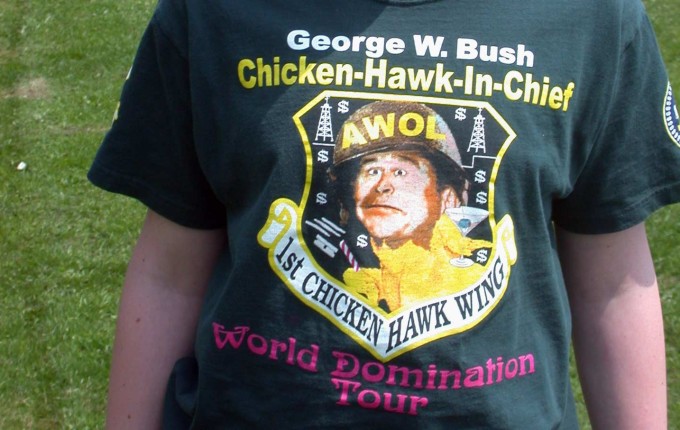
Finally, if the content of someone's AI-generated image/audio/whatever is truly for a 1st amendment protected purpose, nothing stops them from just...making their criticism/opinion without digital depictions. For example, I don't think there's some expressive meaning to making Biden say "I'm senile" that just stating your opinion yourself wouldn't convey (unlike images on a t-shirt, which were integral to the point that the student was trying to make in Guiles v. Marineau [shirt in question]). To say that relinquishing your control over the direction of a work can be considered an artistic choice is probably a step too far in my mind. Nonetheless, I think reasonable minds could differ on this point, so feel free to let me know your take.
Detour: Chill, bro
Since the articles focus so intently on the Act's purported cabining of protected speech directly, they don't address the possibility of a chilling effect on speech. I actually think this point has more merit than the complaints about 1a defenses being limited, or an argument that the whole statute is impermissible because of its restrictions themselves. In fact, this point would be where the other arguments about the statute being vague/broad would have the most powerful effect.
Conclusion
Hopefully I've convinced you that there's more to the No AI FRAUD Act than meets the eye. Unlike the Act, I did have to cabin this essay heavily, because the IP nerd in me wants to revive my old RA position and just dive right back into the literature on rights of publicity, privacy, and appropriation. If I did that, I'd end up with a second essay on Essays/ai-infringement and nobody wants that, haha. I definitely have more to say on Section 230, but outright analyses of that statute are kind of stale. If I find something else that it dovetails with, I'll explore it and devote too much of that future essay to it as usual.
I'll be sure to update this page as the bill trudges through the process. It'll be interesting to see what provisions that raised concerns for the media and I do get amended or stricken.
Further Reading
Some excellent reporting on another Section 230 AI Bill™ by the same guy who wrote the discussed misguided article, haha. This one wants to strip immunity from ANY AI-related claim from it. That's stupid for the reasons outlined above: there needs to be at least some secondary analysis to fill the gap (which the No AI FRAUD Act does quite nicely—#00230: Incentive to Kill). Techdirt - Even If You Hate Both AI And Section 230...